
Can You Put PPF On Carbon Fiber Parts?
Request a Carbon Fiber PPF Fitment Review near Miami, FL
If you’re considering PPF for a carbon hood, splitter, or trim piece, you probably want to protect it without losing the look that made you choose carbon in the first place. Before choosing coverage, it helps to understand how film will work with the finish already on your part.
PPF can be applied to suitable finished carbon fiber parts, but compatibility depends on the surface, its condition, and the film being used. On a clear-coated component, the adhesive contacts the clear coat over the weave. An unfinished, peeling, or damaged part needs a different assessment before installation.
Start by identifying that finish and deciding whether you want to keep its current sheen. Those details tell you more than the vehicle badge or whether the part is described as “exposed carbon.”
(305) 308-7604What Finish Does Your Carbon Fiber Part Have?
A visible weave does not mean the carbon is unfinished. “Exposed carbon” often describes carbon left visible beneath a protective finish, rather than covered with colored paint. The useful question is what surface the film will actually adhere to.
Factory and aftermarket parts both need that check. A factory component may have a documented gloss or satin finish; an aftermarket piece may use a different clear coat, resin system, or surface treatment.
Request a Fitment Review| Part Or Finish | What To Check | What It Means For PPF |
|---|---|---|
| Factory Gloss Carbon | Finish specification, surface condition, and previous treatments | An intact clear coat may be suitable, subject to the film’s application requirements. |
| Factory Matte Or Satin Carbon | Original sheen and the part manufacturer’s care instructions | Compatibility and the finished appearance both need checking. |
| Finished Aftermarket Carbon | Supplier details, clear-coat information, and repair history | A glossy appearance alone does not establish suitability. |
| Exposed Resin Or An Unknown Finish | Whether the part has a protective surface finish and is intended for exterior use | Identify the surface before choosing an adhesive film. |
| Repaired, Peeling, Or Deteriorating Carbon | Repair records and the condition of the existing finish | Resolve the underlying problem before considering film. |
You do not need to identify the resin chemistry yourself. A supplier’s product listing, finish specification, or receipt can give the installer a useful starting point. If those records are unavailable, say so rather than guessing.

Does Clear PPF Change The Look Of Carbon Fiber?
Clear PPF leaves the weave visible, but it can change how the surface reflects light. The result depends on the original finish, the film’s sheen, and how its edges are positioned.
If you like the current appearance, compare the proposed film with the uncovered finish in daylight and from a side angle. Look beyond the weave itself: reflections, surface texture, and the boundary between covered and uncovered areas all affect the result.
Full-panel coverage can avoid a film line across the middle of a visible surface. It does not guarantee hidden edges around every vent, recess, or opening.
PPF On Matte Carbon Fiber Needs A Finish Match
Gloss film can make a matte or satin component look shinier. A satin film produces its own surface appearance, which may differ from the original finish. XPEL, for example, describes STEALTH as a satin film that can preserve a suitable low-gloss appearance or change a glossy surface to satin.
When comparing matte and satin PPF finishes, decide whether you want to preserve the existing sheen or deliberately change it. Those are different goals.
Do not polish matte carbon to prepare it as though it were a gloss panel. Once suitable film is installed, follow the care requirements for matte and satin PPF to maintain its appearance.
3M Certified Installation in Miami, FL
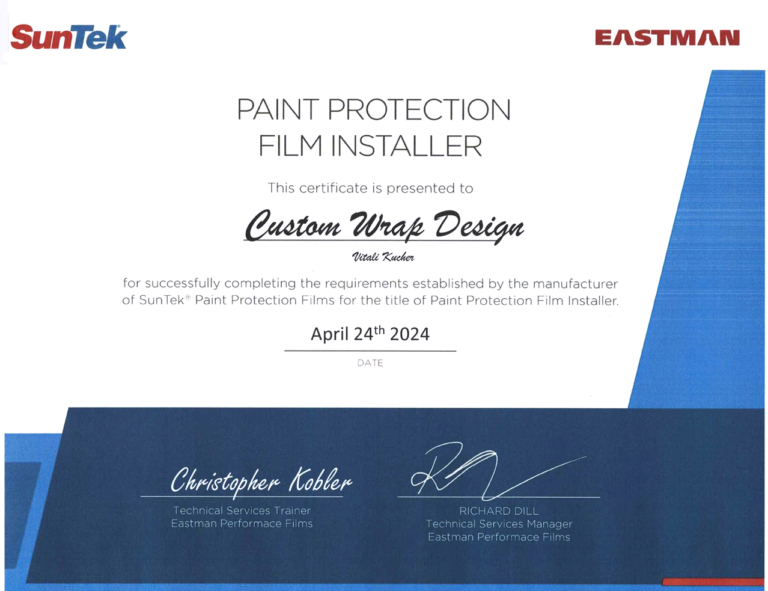
- 3M certified – Materials and methods that meet manufacturer standards
- Built for Florida – Rated for heat, salt air, and UV exposure
- Warranty-backed – Proper installation protects your coverage



How Does PPF Fit A Carbon Hood, Splitter, Or Side Skirt?
Part shape determines where a seam or exposed edge may remain. A broad hood and a narrow splitter need different coverage plans, even when their finishes look identical.

Clear PPF On A Carbon Fiber Hood
A carbon hood offers a large visible surface, so appearance and coverage boundaries matter. Vents, recesses, and access beneath the perimeter determine whether edges can be wrapped or need to stop short.
Before choosing coverage, establish:
- Whether the film will cover the whole hood or a defined section.
- Where it will end around vents and openings.
- Which perimeter edges can be wrapped.
- Whether any seams will remain visible.
A simple hood may offer straightforward coverage. A vented or deeply sculpted hood needs closer planning.

PPF On A Carbon Fiber Splitter And Other Aero Parts
Splitters, side skirts, canards, and diffusers combine narrow surfaces with sharp changes in direction. Mounting hardware, tight gaps, and inaccessible undersides can limit edge wrapping.
PPF adds a protective layer against everyday chips and light surface abrasion, but it cannot prevent a splitter from cracking during a curb strike or heavy impact. For low-mounted parts, choose coverage around the areas you want protected and understand where the film ends.
The same paint protection film used in a wider vehicle protection plan still needs to suit each carbon component’s finish and shape.
What Does A Real Carbon Fiber PPF Installation Show?
Clear PPF on this Lamborghini Revuelto was planned section by section around painted panels, exposed carbon, vents and sharply angled aero pieces. The splitter, side skirts, rear deck and lower aero surfaces each needed film fitted to their shape and finish.
Your car may need a different approach. A factory satin carbon panel or an aftermarket splitter needs its own assessment, whether it’s on a McLaren or another vehicle. The part’s finish and condition determine which film to use and how to prepare the surface.

Can PPF Cover Faded Or Damaged Carbon Fiber?
PPF should not be used to cover up a failing finish. Cloudiness, yellowing, peeling, cracks, or visible separation need assessment before film is considered.
These symptoms can have different causes. A photograph may show where a problem is, but it cannot establish whether the issue is limited to the surface finish or involves the component itself.
If refinishing is needed, complete that work first and follow the repair material manufacturer’s curing requirements before applying film. There is no single waiting period that suits every clear coat or repair system.
For carbon fiber protection in Miami, distinguish the film’s protection from the part’s own resistance to sunlight. Do not assume that a clear film makes an unfinished component suitable for outdoor use or guarantees against resin yellowing. Any UV-related claim should match the exact product documentation.
Does A PPF Warranty Cover Carbon Fiber?
A successful installation does not automatically mean the carbon component has the same warranty coverage as factory-painted bodywork.
For CWD’s XPEL PPF installations, warranty coverage is split between a one-year CWD installation warranty and a ten-year XPEL manufacturer warranty on the film. Each applies under its own written terms; existing paint damage, suitability and the cause of a later issue still need to be assessed separately.
Installation suitability and warranty eligibility are separate questions. A coating or finish may accept film without carrying the same terms as factory-painted bodywork. Confirm the terms for the exact XPEL film, carbon component and finish instead of assuming that successful fitting establishes warranty coverage.
Before approving the work, get written answers to three questions:
Film Coverage: Does the exact product warranty apply to this carbon finish?
Installation Coverage: What preparation and application issues does the installer cover?
Underlying Part: What happens if the existing finish fails or is affected during removal?
Keep the distinction between film and workmanship coverage clear. A warranty against a film defect is different from protection against failure of the clear coat beneath it.
What Affects The Cost Of PPF On Carbon Parts?
The part’s size matters, but its shape and access can matter just as much. A small aero piece with deep recesses may take more fitting work than a larger, simpler surface.
The main PPF quote factors include:
The number and size of the components.
Surface condition and any preparation required.
Vents, tight curves, and sharp returns.
Access around mounting points and panel edges.
The selected film and agreed coverage boundaries.
Request a quote for the actual components you want covered. A whole-car package price does not tell you what a carbon hood, mirror pair, or splitter will cost individually.
Other Questions Before You Choose Carbon Fiber PPF
Is Carbon-Pattern Vinyl The Same As PPF On Real Carbon?
No. Carbon-pattern vinyl creates a carbon-like appearance over another surface. Clear PPF protects a suitable existing finish while leaving the real weave visible. Identify which material you have before discussing compatibility or removal.
Can Existing Film Be Replaced Without Damaging The Carbon Finish?
Damage-free removal cannot be promised for every component. The condition of the finish, previous repairs, and the existing film all matter. Have the surface and film assessed before removal, especially if there is peeling or an uncertain repair history.
Should You Add A Ceramic Coating Before PPF?
Do not add a coating as a preparation step unless the film manufacturer specifically allows it. Existing wax or coating may need to be removed from the bonding surface. Tell the installer about any treatment already on the carbon so preparation can be planned accordingly.
OUR REVIEWS & PROJECTS
What To Send For A Carbon Fiber PPF Assessment
For an assessment, start with enough information to identify the part and the finish you want to preserve:
- Vehicle year, make, model, and trim.
- Whether the component is factory or aftermarket, including the supplier if known.
- Any available finish specification or product listing.
- Previous repairs, coatings, or film.
- Close-up daylight photos and a wider photo showing the whole component.
- Your preferred gloss, satin, or matte appearance.
- The sections you want covered and any concerns about visible edges.
You can send photos and part details to discuss the proposed coverage. Photos provide a starting point; an in-person inspection may still be needed to assess surface condition and edge access before the work is agreed.
COME
VISIT US
1962 NE 151st Street, North Miami, FL 33162