


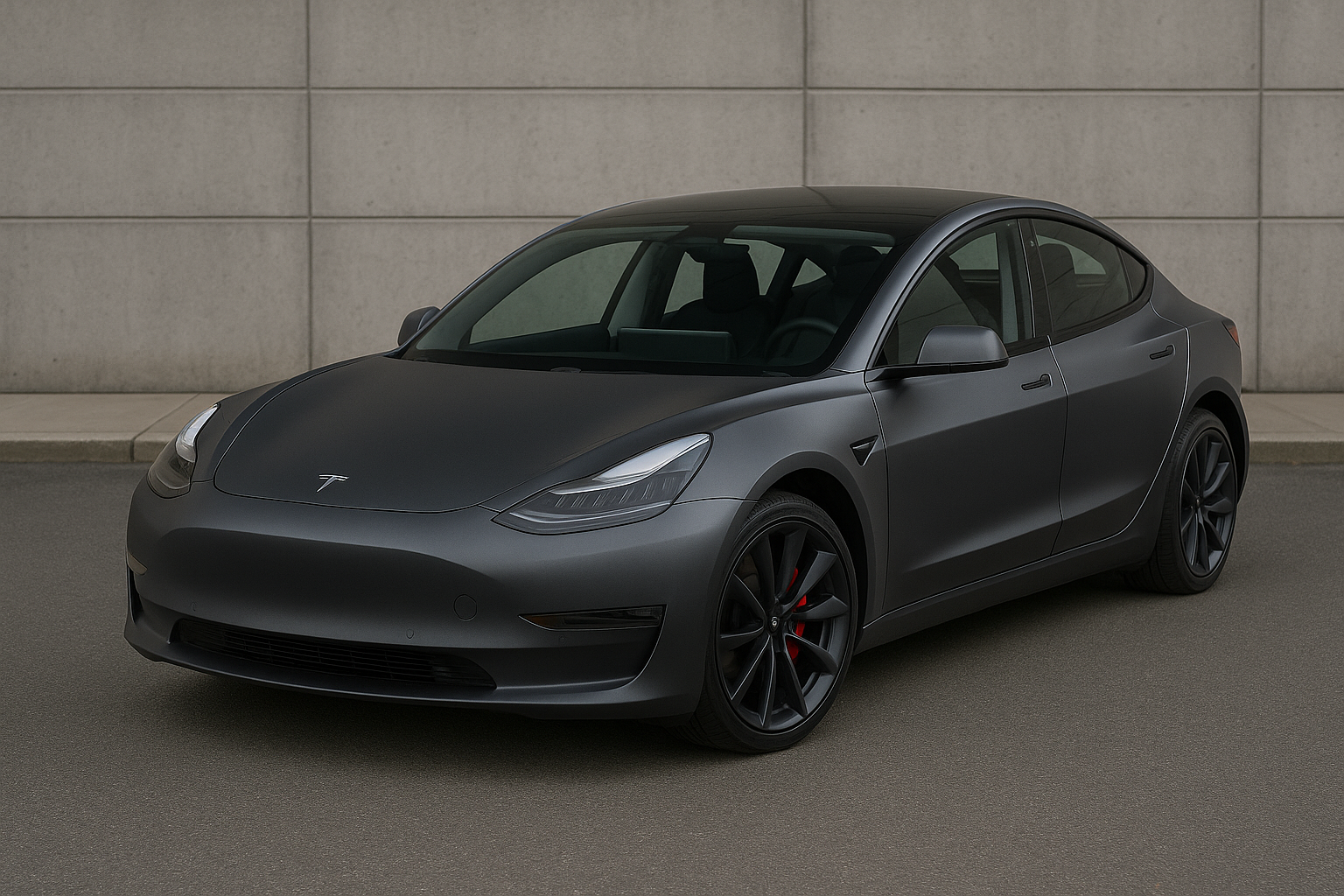
You see them everywhere in Miami—Brickell, Aventura, South Beach. The Tesla Model 3 has become as common as palm trees, and when every other one looks identical, standing out takes a little extra effort.
Wrapping your Model 3 is one of the most popular ways to do it. Here’s what you can expect to pay in Miami, and what really drives the price up or down.
How Much Does a Tesla Model 3 Wrap Cost in Miami?
Pricing depends on the type of film and coverage you choose. Here’s what most Miami shops quote for a Model 3:
Full Color Change Vinyl
Transforms the look with finishes Tesla doesn’t offer, from deep matte blacks to color-shift films.
$3,000 – $5,500Full Paint Protection Film (PPF)
Thicker, clear (or limited color) film built to handle rock chips, scratches, and UV.
$5,000 – $8,000Partial Wraps
Chrome delete, hood, roof, or accent panels for a refresh without full coverage.
$300 – $1,000Tesla’s own wrap program for the Model 3 usually comes in around $4,000–$4,500 but limits your color choices. Independent shops often offer hundreds more color and finish options, sometimes including extras like door jamb coverage.
Why Model 3 Wrap Prices Vary So Much
Film Type & Quality
PPF costs more than vinyl because it’s thicker, self-healing, and built primarily for protection instead of appearance.
Finish & Color
Matte, satin, chrome, and color-shift films sit higher on the price ladder than standard gloss colors.
Install Complexity
Experience with Teslas, camera and sensor handling, and door jamb coverage all affect the final quote.
Film Type and Quality
The biggest cost difference is vinyl versus paint protection film. PPF costs more because it’s engineered for impact resistance and longevity. It’s thicker, can self-heal light scratches with heat, and often lasts 7–10 years in Florida’s climate.
Vinyl wraps are thinner and primarily focused on appearance. They’re ideal if you want colors and finishes Tesla doesn’t offer. Most quality vinyl wraps last around three to five years. If you’re comparing vinyl and PPF in terms of which works better in Florida heat, it comes down to whether your priority is color and style or maximum physical protection.
Finish Options
Gloss is the most affordable finish because it’s the most common. Matte, satin, and chrome typically cost more due to film manufacturing and install difficulty. Going matte black on a Model 3 frequently adds $500–$1,000 over basic gloss.
Color-shift wraps sit at the top of the price spectrum. These films flip color depending on angle and lighting, which is part of their appeal. Full color-shift installations often land in the $4,500–$6,500 range.
Installation Expertise
Model 3s aren’t just “another car” to wrap. Cameras, sensors, glass roof sections, and EV-specific electronics need careful handling. Experienced Tesla shops charge more, but you’re paying for clean edges, intact sensors, and wrap removal that won’t damage your paint.
Ask how many Teslas they’ve wrapped recently, what brands they use, and what their process is around disassembly and reassembly.
Door Jambs and Details
Basic pricing usually only covers what you see with the doors closed. Wrapping the door jambs for a complete color change effect typically adds $500–$1,000. It’s optional, but many owners doing a full color change prefer that seamless look when doors open.
Should You Wrap or Repaint Your Model 3?
Tesla’s OEM paint is known for being on the softer side. Automatic car washes, bad wash techniques, and highway driving all leave their mark. A wrap acts as a sacrificial layer and takes the majority of that abuse.
Resale is another factor. Remove a wrap and the factory paint underneath can still look nearly new. A repaint in the $8,000–$12,000 range usually doesn’t hold value as well as original factory paint.
Paint Protection
Wraps absorb rock chips and light scratches before they hit your original paint.
Endless Colors
Tesla offers a handful of colors; vinyl offers thousands of finishes and shades.
Reversible
Wraps peel away when you want a new look or need to sell, revealing factory paint.
Choosing Between Vinyl and PPF on a Model 3
Many Miami Model 3 owners end up deciding between full PPF, full vinyl, or a hybrid of both.
Full PPF makes sense if you spend lots of time on I-95 or the Turnpike, drive long distances, or park outside. It’s clear (or available in limited tints) and focuses on preservation rather than restyling. If you’ve already checked PPF costs for the Model Y, you’ll find numbers for the Model 3 are in a similar range due to comparable size.
Vinyl is the better choice if your main goal is a new look. It offers unlimited color options and unique finishes, but won’t stop stone chips the way dedicated PPF can. For extra protection on top of vinyl, some owners later add clear film to the most exposed areas or switch to PPF completely after a few years, exploring different paint protection film options as their needs change.
Hybrid setups are common: PPF on high-impact zones (front bumper, hood, mirrors) and vinyl on the rest of the car for color change. It’s a good balance of protection and customization.
Finding Tesla-Experienced Wrap Installers in Miami
Not every wrap shop is a good match for a Model 3. You want people who know EVs, understand camera calibration zones, and have done numerous Teslas—not just a few test projects.
| Question to Ask | What You Want to Hear |
|---|---|
| How many Teslas have you wrapped recently? | Several Model 3, Y, S, or X vehicles in the past few months. |
| Which films do you use? | Premium brands like XPEL, 3M, Avery Dennison (not off-brand film). |
| What does your warranty cover? | Both manufacturer defects and installer workmanship. |
| Do you handle battery disconnect safely? | Clear explanation of 12V disconnect procedure and EV-safe workflow. |
Tesla doesn’t officially “certify” wrap shops the way it does body shops, but some installers complete manufacturer training through XPEL or 3M. That training plus Tesla-specific experience is a strong signal you’re in the right place.
Is DIY Wrapping Your Model 3 a Good Idea?
Tesla owners tend to be tech-savvy, so DIY is always tempting. But wrapping a Model 3 is not a casual weekend project. The car’s curves, bumpers, and quarter panels demand advanced heat-forming skills and lots of practice.
Pros usually factor 10–15% extra material into a job for mistakes and trimming. First-timers often waste 30–40% of a roll, erasing any perceived savings. The risks of attempting a Tesla wrap yourself aren’t just about wasted film either—poor installs can damage paint or interfere with sensors.
Professionals typically finish a full wrap in two to four days, including prep and paint correction. DIY attempts frequently drag out for weeks and still end up with visible seams, bubbles, or lifting edges.
How Long Does a Tesla Model 3 Wrap Last?
In Miami, a properly installed vinyl wrap on a Model 3 usually lasts three to five years. PPF often lasts longer due to its thicker construction and self-healing properties.
Heat, humidity, sun exposure, and coastal air all accelerate wear. Maintenance extends wrap life more than most people realize: gentle hand washes, avoiding harsh chemicals, and checking edges regularly all help.
Hand wash every couple of weeks with pH-neutral soap, skip brush-style automatic washes, and park in covered areas when possible. Small edge lifts can often be corrected if caught early instead of turning into large peel-back areas that require rewrapping.
If you’re worried about whether a wrap might damage your Tesla's paint, the answer is no when installed and removed correctly. Professional shops prep the surface properly and remove film with the right heat and technique so the factory finish remains intact.
So What Does a Tesla Model 3 Wrap Really Cost in Miami?
Realistically, you’re looking at $3,000–$8,000 depending on whether you choose vinyl, PPF, or a mix of both, plus options like door jambs and specialty finishes. The key variables are film quality and installer experience—not just the lowest quote.
Get multiple estimates, compare film brands, ask about warranty terms, and confirm their track record with Teslas. Once you’ve protected the paint and picked the right finish, your Model 3 doesn’t have to blend in with every other one on the road—or in the charger line—ever again.


